



Prague Zoo Recieves Lord Howe Island Stick Insect Eggs From San Diego, Offering Hope of Rearing Males For the First Time
Another significant milestone in the breeding of up to 15-cm-long “tree lobsters”. Prague Zoo has received 300 eggs of the critically endangered Lord Howe Island stick insect from San Diego Zoo—and they are no ordinary eggs. They were produced through sexual reproduction involving fertilisation, which gives rise to both females and males. Until now, only so-called parthenogenetic individuals, originating from unfertilised eggs, had hatched in Prague. In Lord Howe Island stick insects, such eggs can produce only females. The precious consignment, with the potential to produce males as well, arrived from California in early October, and the first nymphs could hatch around the turn of the year.
 While hatching rates can reach 80 % in parthenogenetic reproduction, they fall to below 60 % in sexual reproduction. The newly arrived eggs were laid in May and June, and their incubation will take around seven months. Photo: Petr Hamerník, Prague Zoo
“We can already see differences. We hope that the larger size of sexually produced eggs also heralds larger young and, later on, larger adults, since our parthenogenetic individuals tend to be smaller. In the future, we will be able to investigate, for example, how mating between a male and a parthenogenetic female affects development, and gain a better understanding of the differences between parthenogenetic individuals and those produced through sexual reproduction involving fertilisation,” says Vojtěch Víta, a specialist invertebrate keeper at Prague Zoo.
The new arrival is all the more precious because no new breeding stock has reached Europe in a decade. “This is not only a step towards establishing a fully representative breeding population of Lord Howe Island stick insects at Prague Zoo, but also opens up prospects for further serious research into the species. If all goes well, we could become a European distribution centre supplying Lord Howe Island stick insects to other institutions,” explains Víta. Given the limited number of studies on Lord Howe Island stick insect husbandry, one possible research question is why the valuable males gradually disappeared from European breeding populations.
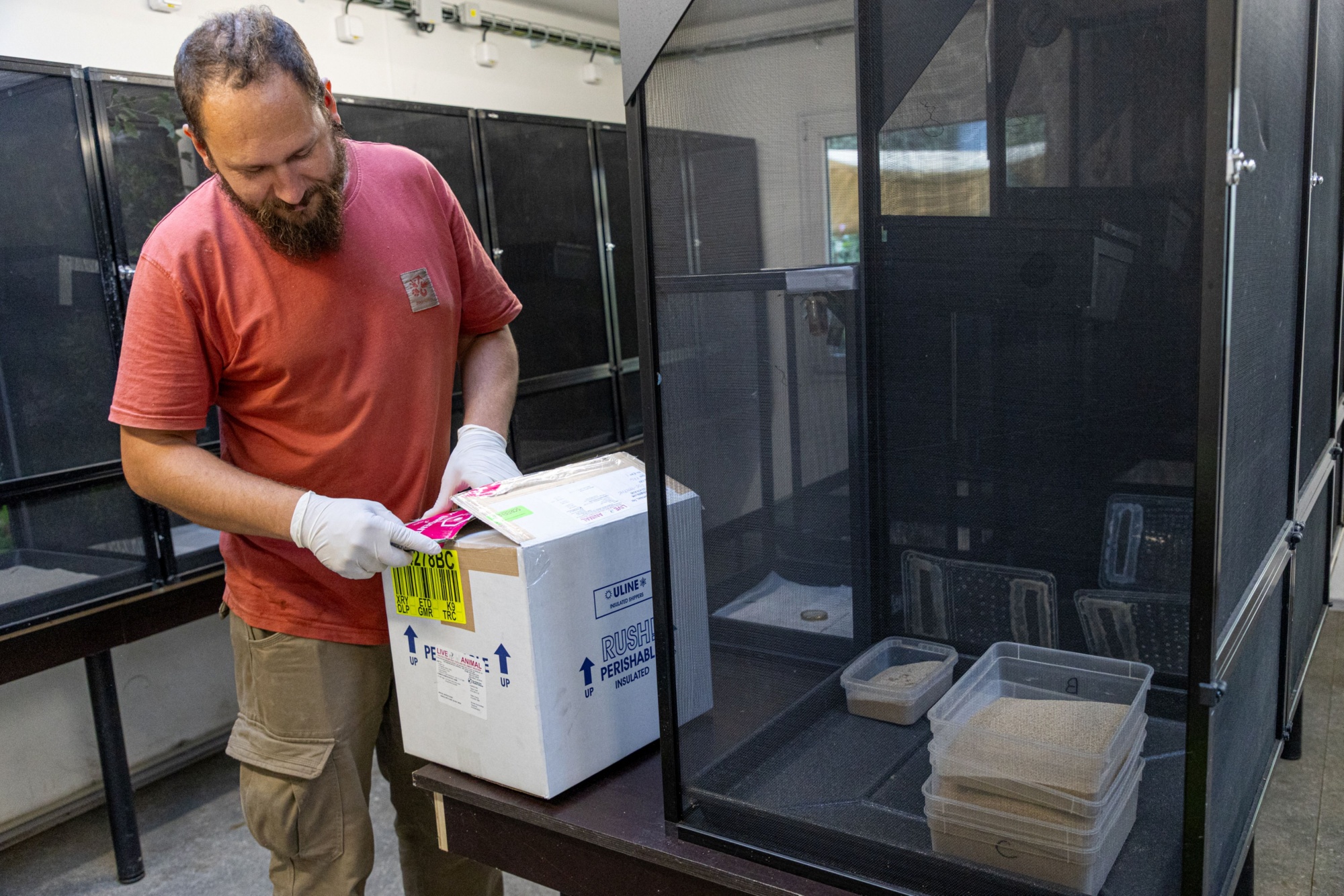
The consignment arrived from San Diego, USA, on Wednesday 1 October 2026. The photograph shows Prague Zoo keeper Vojtěch Víta unpacking it in the zoo’s off-exhibit breeding facility. Photo: Tereza Mrhálková, Prague Zoo
Besides its size, the Lord Howe Island stick insect is remarkable above all for its extraordinary story of resurrection. Just 110 years ago, it was commonly found on Lord Howe Island in the South Pacific, about 700 km north-east of Sydney. The beginning of the end came in 1918, when a ship ran aground on the island’s reefs and rats escaped from it. Within just two years, the insect had disappeared from the island.
In the 1960s, a group of Australian adventurers set out to climb Ball’s Pyramid, the world’s tallest sea stack, rising from the ocean about 20 km off Lord Howe Island. Although they failed to reach the summit, they discovered the dead body of what appeared to be a giant insect on the seemingly inhospitable rock.
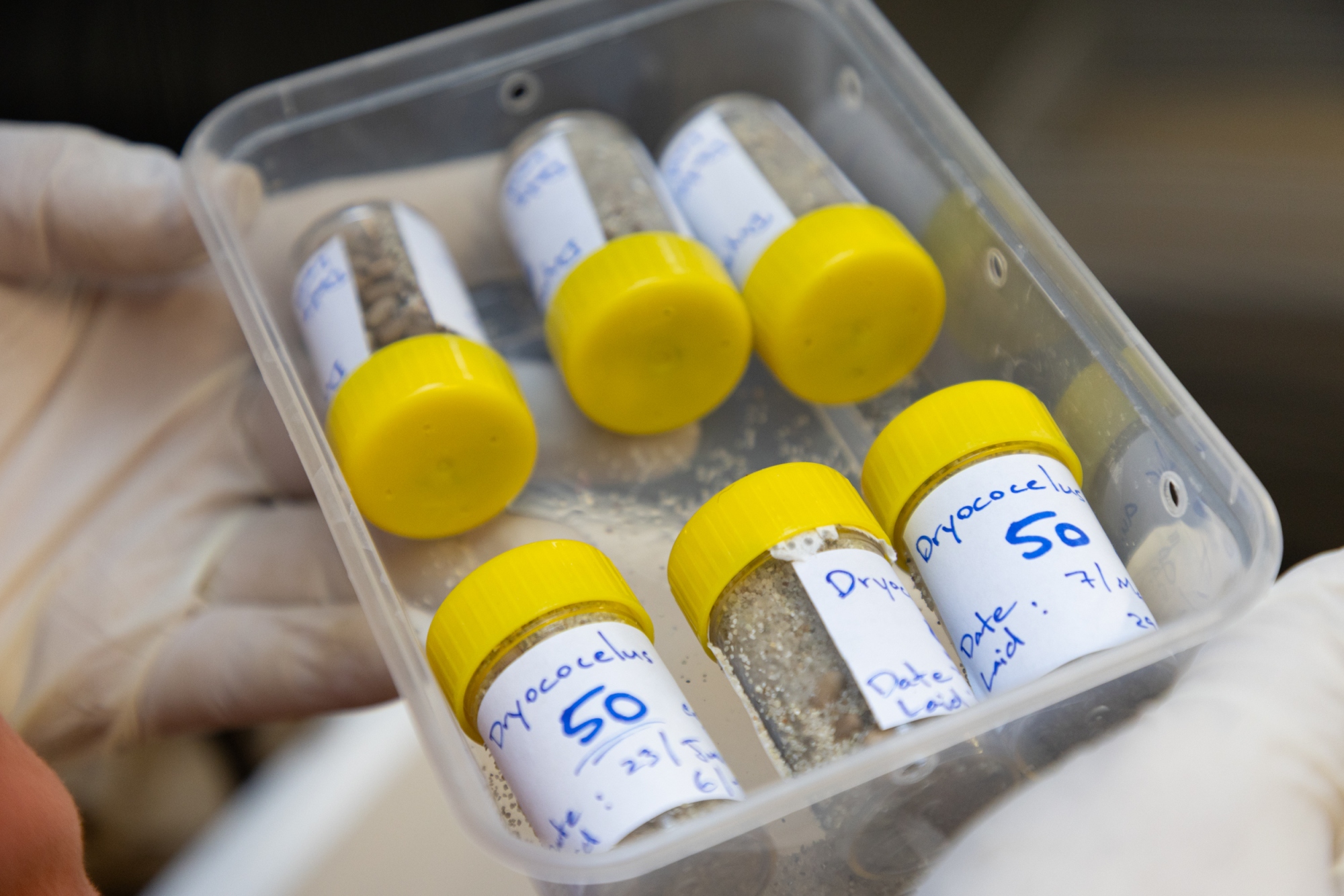
Dryococelus australis is the scientific name of the Lord Howe Island stick insect. In English-speaking countries, it has several nicknames, such as the “tree lobster” or the “walking sausage”. Photo: Tereza Mrhálková, Prague Zoo
The presence of Lord Howe Island stick insects on Ball’s Pyramid was not confirmed until the beginning of the new millennium. These were the first living specimens seen by human eyes in more than 80 years. Scientists subsequently discovered around 20 more individuals, and in 2003 four stick insects were collected to establish a breeding population in human care. Without exaggeration, they were among the rarest insects in the world.
Prague Zoo has long supported the Lord Howe Island stick insect conservation programme run by Melbourne Zoo. The species’ story may soon have a Hollywood-style happy ending. “For the coming year, it is planned to return these insects to their ancestral home island, where they were wiped out more than a century ago. The reintroduction is now possible because the rat eradication programme there appears to have been successful. We may therefore be approaching the literal resurrection of a species, and it is wonderful to be part of it,” adds Víta.
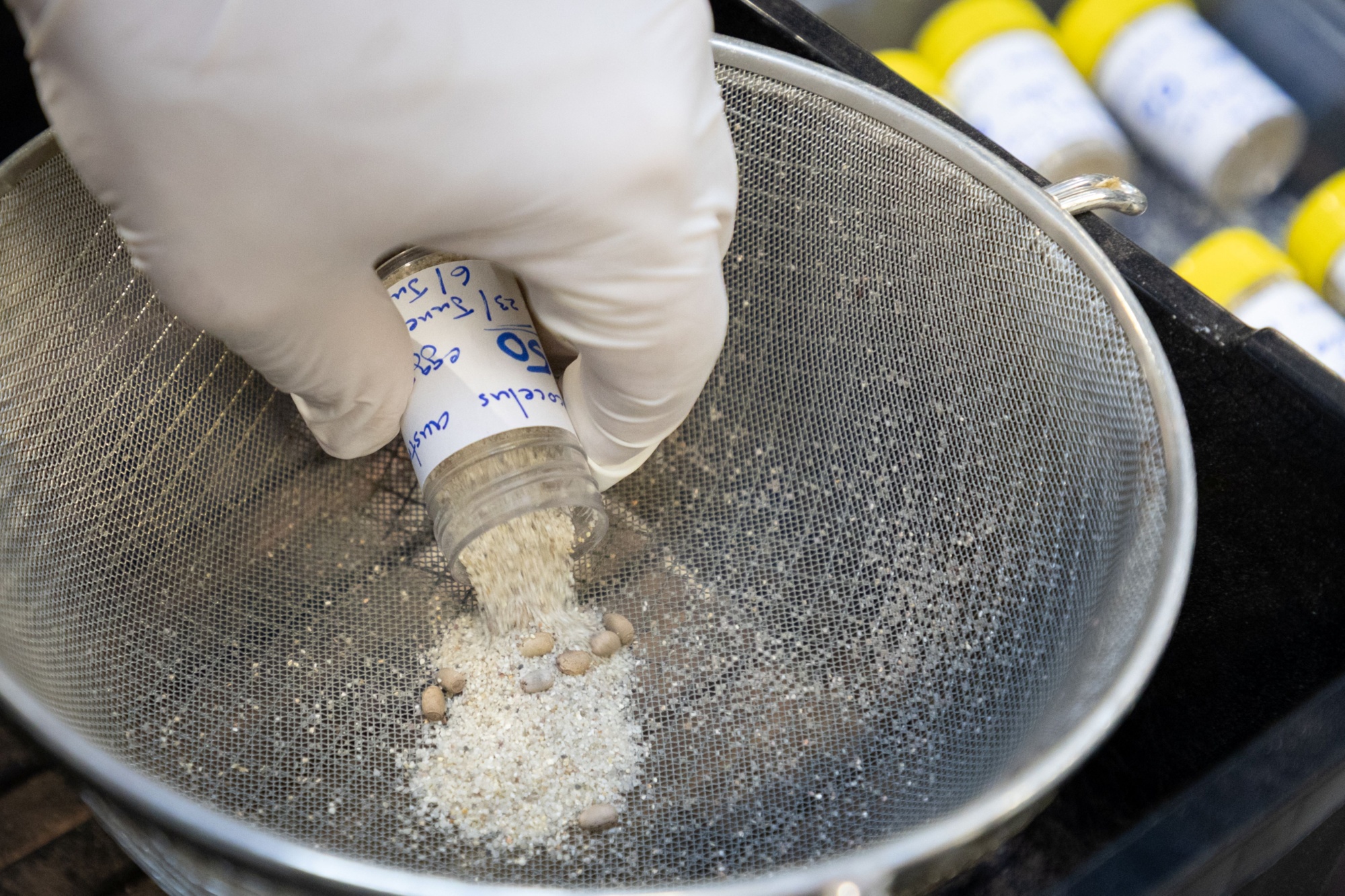
After being sieved, the eggs will be placed in a mixture of beige vermiculite and brick-red Seramis clay granules. Prague Zoo currently keeps around 200 individuals. By monitoring the insects and recording observations from their husbandry, Prague Zoo fulfils an important research role as a modern zoological garden. Photo: Tereza Mrhálková, Prague Zoo
Prague Zoo has kept Lord Howe Island stick insects since 2024, when it received 400 eggs from Bristol. Since then, the team has gained valuable experience and established a stable population. Females that hatched in February this year as the first Lord Howe Island stick insects originating entirely from Prague Zoo are now reaching adulthood. The zoo could soon see a second generation of parthenogenetic females. Visitors can observe the insects in the Ball’s Pyramid exhibit in the lower part of the zoo.
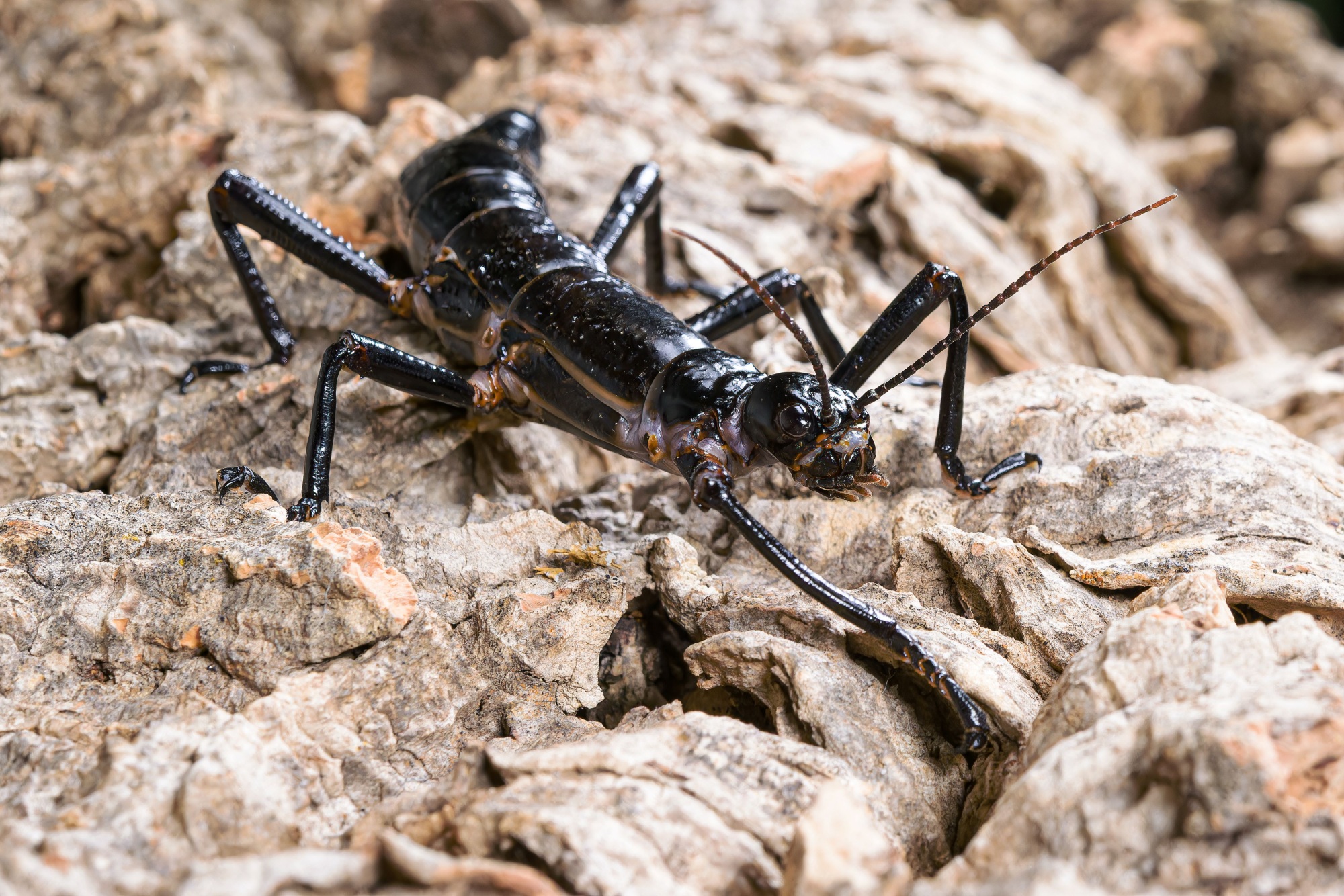
Males differ from females (pictured) in several ways, including the more pronounced spines on their hind legs. The differences between the sexes become visible after approximately the fourth moult. Photo: Petr Hamerník, Prague Zoo
ZOOPRAHA.CZ
Contacts
- The Prague zoological garden
U Trojskeho zamku 120/3
171 00 Praha 7
Phone.: (+420) 296 112 230 (public relations department)
e-mail: zoopraha@zoopraha.cz
Others