



Save the Tasmanian devil

The Tasmanian devil is probably the most iconic inhabitant of Tasmania and has quite rightly become the national animal. For centuries, however, it has also been the object of hostility and persecution. Today, after finally being strictly protected, its survival is threatened by contagious cancer.
 Photo: Petr Hamerník, Prague Zoo
CONTAGIOUS CANCER
In 1996, an infectious cancer began to spread across Tasmania and decimate the devils. It was named DFTD (Devil Facial Tumour Disease). Cancer cells are transferred from diseased to healthy devils through biting. Most animals die within six months. In some places the Tasmanian devil population has dropped by 95 % in just 20 years!

Conservation PROGRAMme
So far there is no cure for devil facial tumour disease and it is fatal to the devils. The threat of extinction is so serious that the struggle to rescue the devils even takes place at the government level. In 2003, the Australian and Tasmanian governments initiated the Save the Tasmanian Devil Program, which aims to preserve a permanent and ecologically functional population of devils in the wild.
Safe HAVEN
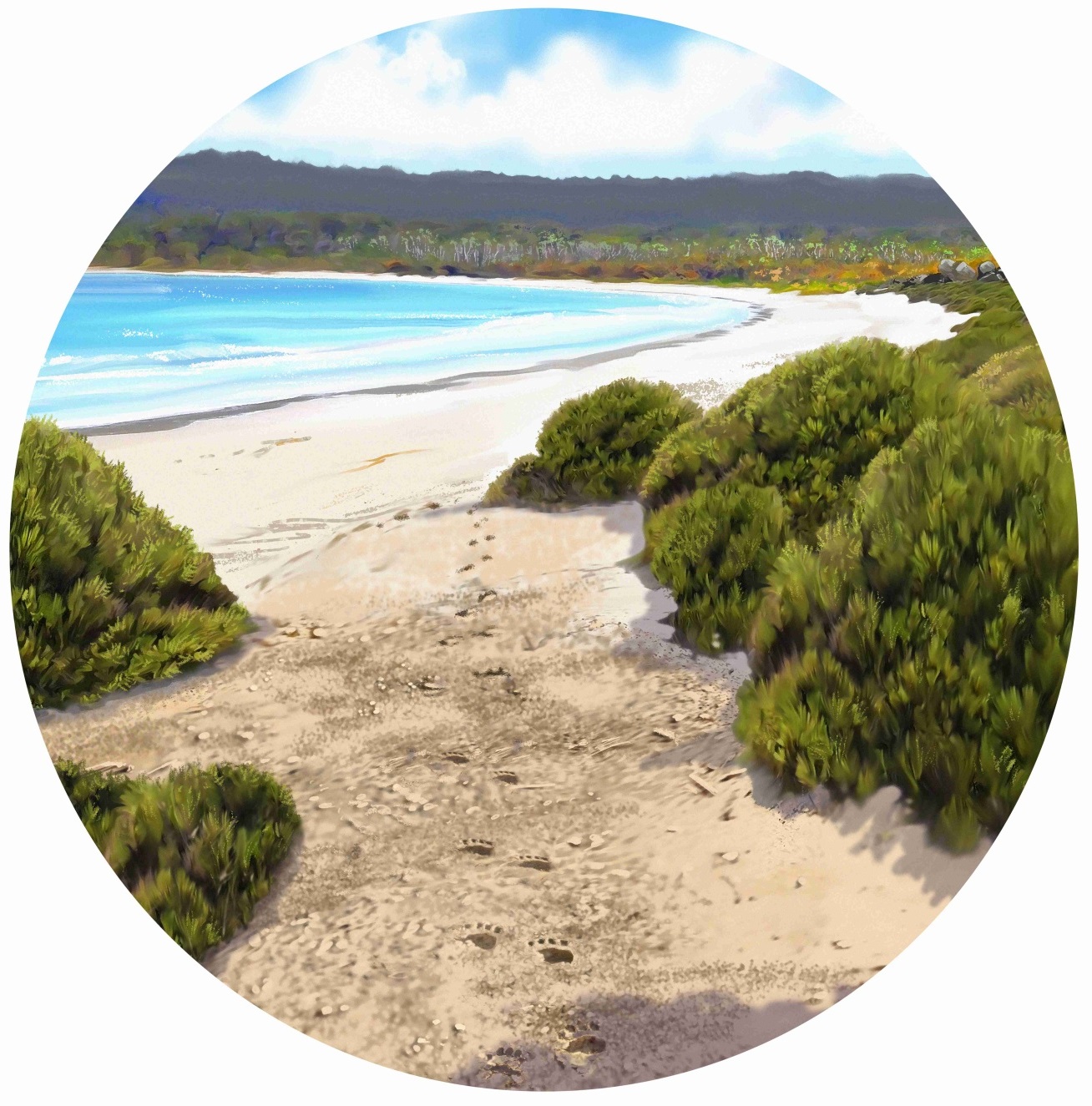
In order to avoid the worst, it was decided to translocate healthy devils to a place where they would not be at risk of being infected with the cancer. The uninhabited Maria Island near the east coast of Tasmania, known for its “painted” sandstone cliffs, was chosen. The whole island is protected as a national park and devils have never lived here, so the disease is not present. The original 34 individuals, released between 2012 and 2017, have grown to more than 100 by 2018!


PRAGUE ZOO HELPS
The devils live freely on Maria Island, so they keep all their natural behaviours and instincts. However, their further fate must be carefully monitored. Prague Zoo has joined the project on Maria Island and contributes financially to the transports of the devils as well as to their monitoring. For example, we take part in maintaining and running off-road vehicles and photo-traps, thanks to which the project staff have an overview of the island’s devils.
HELP US HELP THEM
- Help us protect the devils – support the Maria Island project! All you have to do is choose how…
- By transferring any amount you choose to the “We Help Them to Survive” collection account (IBAN: CZ24 0100 0000 4368 0466 0247, SWIFT code: KOMBCZPPXXX).
- By paying a chosen amount using an electronic pay¬ment touch screen.
For more information, see www.zoopraha.cz/en/help-us.
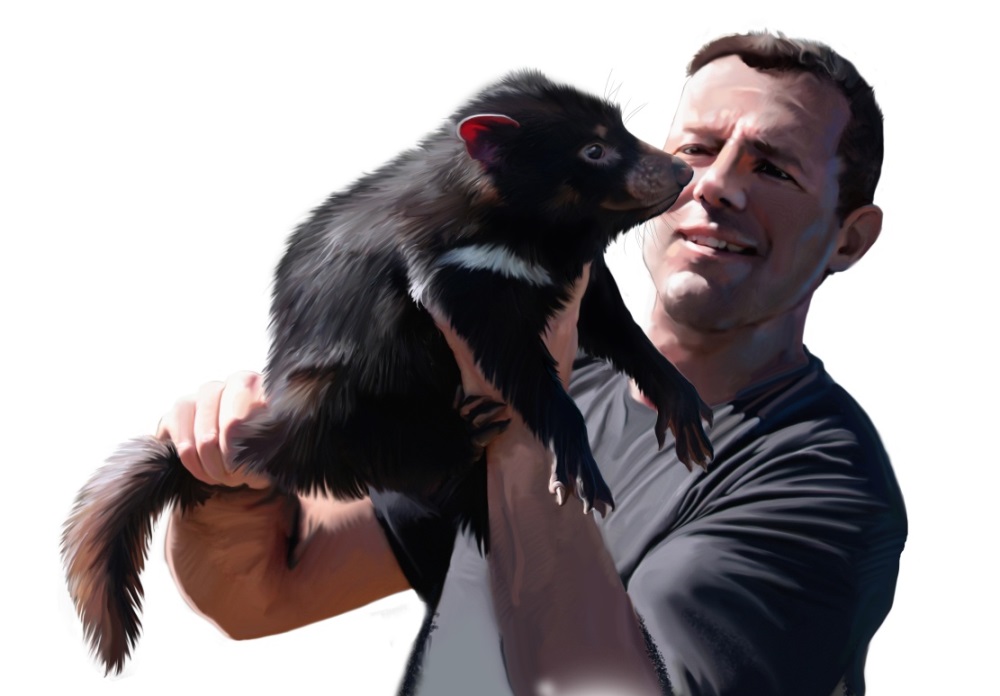

The largest living carnivorous marsupial in the world and a creature with many myths and superstitions; a loner indulging in mass feasts; a shy animal having an undeserved fiery reputation and capable of making eerie growls. This is the Tasmanian devil.

The Tasmanian devil is probably the most iconic inhabitant of Tasmania and has quite rightly become the national animal. For centuries, however, it has also been the object of hostility and persecution. Today, after finally being strictly protected,...

Tasmanian devils are extremely adaptable, inhabiting almost all types of environments except the highest mountains and cities. They play an important role as the health police, cleaning up carcasses. During their rounds they can easily walk up to 16...
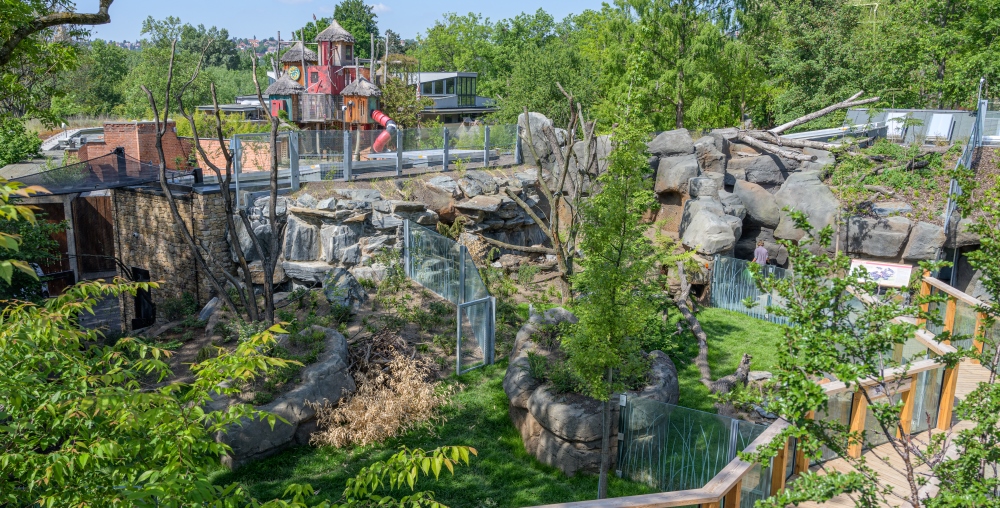
Photo: Petr Hamerník, Prague Zoo

The circular shape of the enclosures in the Tasmanian devil exhibit is no accident. It is a crater! It was created artificially, but is modelled on real life. It is the Darwin Crater in Tasmania, one of the places where Tasmanian devils...

The short-beaked echidna is a truly remarkable mammal. It hatches from an egg, forms a temporary pouch on its belly, resembles a hedgehog but feeds like an anteater, and can sense electric fields! Meet one of Australia’s most widely...

Australia is not just the smallest continent and the land of marsupials – it is also a continent of snakes, especially venomous. There are actually more venomous species here than non-venomous ones, which is not found anywhere else in the world.

Mammals are a large group of animals to which we humans also belong. They all suckle their young. However, the manner in which they bring their young into the world takes three completely different forms. These are the monotremes,...

Say “wombat” and people will understand you almost anywhere in the world. This marsupial dislikes heat, leads a solitary life, and spends at least half of its time in burrows—often having several within its territory. These underground shelters...

The largest meat-eater in Tasmania today is the Tasmanian devil. At the beginning of the 20th century, however, a much larger marsupial predator still lived on the island, which became part of the Tasmanian coat of arms – the Tasmanian tiger. There...

Marsupials and placental mammals (i.e., all other mammals except platypuses and echidnas) are different evolutionary branches. The similar lifestyle of many species, however, led to a similar appearance. Comparisons are not always immediately...

Kangaroos, wallabies and their relatives (such as walaroos, bettongs or potoroos, all of which are collectively called macropods) are among the most successful groups of marsupials. Every third marsupial species in Australia is a macropod! They live...

At a number of sites in Australia we can find rock paintings and handprints made by many generations of Aboriginal people. One of them is Gulgurn Manja Shelter in the State of Victoria in southern Australia. The handprints here were made...

When the first humans came to Australia 65,000 years ago, they found astonishing giant creatures. It was not just some of the marsupials that had grown to unusual sizes, but echidnas, flightless birds and lizards too. A few millennia later, these...

ZOOPRAHA.CZ
Contacts
- The Prague zoological garden
U Trojskeho zamku 120/3
171 00 Praha 7
Phone.: (+420) 296 112 230 (public relations department)
e-mail: zoopraha@zoopraha.cz
Others